
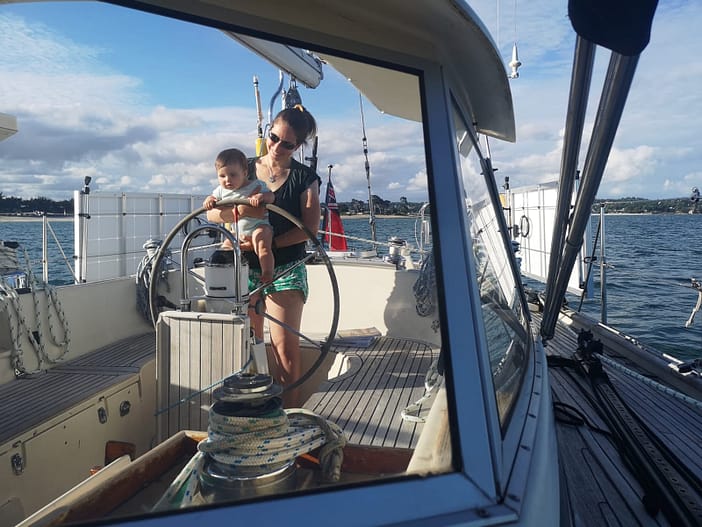
Family sailing life afloat – honest reflections on choosing life on a boat with kids
The Questions We Had to Answer First
If you’ve found your way here, chances are life afloat has been tugging at you for a while.
Maybe it started with a photo, a book, a YouTube video, or a quiet moment where you caught yourself wondering if life could feel a little less rushed, a little more connected. For many families, sailing offers a powerful mix of adventure, simplicity, and time together that’s hard to ignore.
But alongside that pull often comes a lot of noise.
Advice. Opinions. Highlight reels. Very confident strangers on the internet telling you exactly how they did it — and why you should too.
This post isn’t that.
This isn’t a checklist, a sales pitch, or an attempt to convince you that life afloat is the answer. It’s a pause. A chance to slow things down and sit with some of the questions we had to answer ourselves before we bought boats, crossed seas, or sailed south — and questions we’re still revisiting today.
Some families will read this and realise life afloat really does fit them. Others won’t. Both outcomes are valid.
If you’re wondering whether living on a boat with kids is realistic — emotionally, practically, and financially — this post is for you.
A quick note on timing
One thing we learned early on is that these questions don’t get answered once and then neatly filed away.
The answers change.
They change when you go from sailing as a couple to sailing as parents.They change during pregnancy. They change with a baby on board, then again with a toddler.They change with seasons, finances, health, confidence, and energy levels.
So if you’re reading this thinking, “I don’t have all the answers yet” — that’s normal. You’re not behind. You’re doing it properly.
The questions we had to answer
Before we get into them, I want to say this clearly:
These aren’t questions anyone can answer for you.They’re not tests to pass or fail.They’re prompts — the kind that sit quietly in the background and gently shape better decisions over time.
They’re also questions we didn’t always answer honestly the first time around and ones that we’re always revisiting, even now.
1. Why do we want this — really?
When we first set sail, if I’m completely honest, we were running away from reality.
I’d lost my Dad to a brain tumour when he was just 57 years old, and Dave was having a really tough time working for the Ambulance Service. Life felt heavy. Fast. Relentless. We were living to work, always rushing, always feeling like something else needed doing.
So we gave ourselves permission to stop.
We agreed a two-year career break from our NHS jobs, rented our house out, moved onboard, and set sail — with very little sailing experience (I had none at all). At the time, it felt like survival. A chance to decompress, breathe, and try to make sense of things again.
And for that season of our lives, it was exactly what we needed.
But over time, our motivation changed. What started as escape slowly turned into intention. Freedom — real freedom — began to matter more to us than security or money. Even when finances were tight, the ability to live each day as it came, to travel slowly, and to really dig into each place we visited felt like a gift we weren’t ready to give back.
Recognising why you want this — and being honest when that reason shifts — matters far more than having a perfect answer at the start.
2. What does “enough” actually look like for our family?
Enough space.
Enough rest.
Enough privacy.
Enough calm.
Life on a boat compresses everything — including emotions. There’s no spare room to retreat to on a hard day, and no pretending you’re fine when you’re not.
This question isn’t really about boat size or layout. It’s about what your family needs to feel regulated and okay — especially on the days when the weather’s poor, plans change, sleep is broken, or everyone’s running on empty.
Thinking about the ordinary days, not just the beautiful ones, makes all the difference.
When living on a boat, you come to realise how little you actually need to live and be happy on a day-to-day basis, which is so incredibly freeing.
Start thinking about everything you have in your life right now. What purpose does it serve? Does it make you happy? Could you live without it and still be OK?
Start questioning everything you own now, and if you decide that moving about a boat is the right decision for your family, downsizing will be so much easier. Believe me, I’ve done it a few times now and it definitely gets easier.
3. How do we cope when things feel hard — individually and as a couple?
Sailing has a way of stripping everything back.
For me, this was one of the hardest truths to face. I’ve always been a nervous sailor, and I suffer badly with seasickness. That didn’t magically disappear with experience — if anything, it became harder once we had our daughter onboard.
There were sails where I was violently seasick, stuck down below, unable to leave Erin — partly because she wouldn’t let me out of her sight when she was very young, and partly because she absolutely did not want Daddy in those moments, which was incredibly hard for us both. Meanwhile, the sea built outside.
Erin, on the other hand, adapted incredibly well to life onboard. She has never been sick at sea (touch wood), and often seemed far more at home while sailing than I did — perhaps because she’d already spent most of my pregnancy sailing with me, tucked up in my tummy, where the movement was simply normal to her.
But even when sailing with a settled baby, fear still has a way of creeping in.
There were times we were already committed to a passage, already out there, when the weather worsened and heavy seas followed. One sail in particular is well and truly lodged in my memory. Not long after sailing through the Strait of Gibraltar into the Mediterranean, a rogue wave — easily ten metres — came from behind, out of nowhere, and almost capsized us.
I was absolutely terrified.
We immediately diverted our course towards the safety of an anchorage on the Spanish coastline — but that still meant around six more hours at sea, as we were a fair distance from land. It was the longest six hours of my life. Darkness fell, we couldn’t see what was coming, and all I could do was wait for it to happen again.
Thankfully, it didn’t.
But that moment shook my confidence in a way that never fully went away. I felt completely out of control. Nature can be wild, and when you’re at sea, you can only work with what you’re given and rely on your training to get through it safely.
It forced me to acknowledge something important: bravery isn’t about pushing through fear at all costs. Sometimes it’s about listening to it.
So it’s worth asking yourself:
How do you react when unexpected things happen?
Do you push through, freeze, reassess, or need time to recover?
And how does that change when a child is depending on you?
Knowing how you respond to fear — and whether you feel able to carry that alongside the responsibility of parenthood — is a crucial part of deciding whether life afloat fits your family.
4. What would this mean for our children — not our ideals?
This was one of the hardest questions to sit with, and the most important.
It’s easy to focus on what sailing can give children: travel, adaptability, independence, learning through experience. Those things can be real and valuable.
But children also need safety, predictability, emotional security, and support — and those needs don’t disappear just because the view is beautiful.
For us, this meant thinking carefully about medical access, sleep, routines, and social connection. It also meant being willing to change course when something wasn’t working, even if it didn’t fit the picture we once had in our heads.
Putting Erin into nursery for the first time just before her second birthday — in a foreign country — was one of the most emotionally difficult things I’ve ever done. Because of Covid, we weren’t allowed inside with her. She was taken from us by strangers wearing face masks, and brought back upset after twenty minutes.
She’d never been without one of us before.
Each day she stayed a little longer. Each day it got easier — for her and for us — but that didn’t mean it wasn’t painful. We chose nursery not because it fit a sailing ideal, but because her emotional wellbeing mattered more than proving anything to anyone else.
That decision sits at the very heart of Families Afloat.
We are not number one anymore.
Yes — we can absolutely still create a life that feels right for us, but we have to accept that compromises will be made when our daughter comes first. She means the world to us, and doing what’s best for her matters more than protecting an idea of how life should look.
At the same time, we still need to fill our own cups too, so we’re able to care for her in the way she deserves.
If we’re miserable, she will be too, so we’re constantly questioning our choices about life in general to make sure we are all happy.
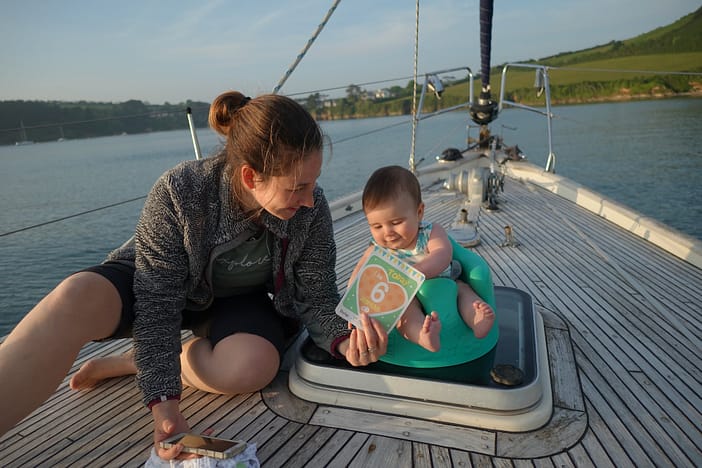
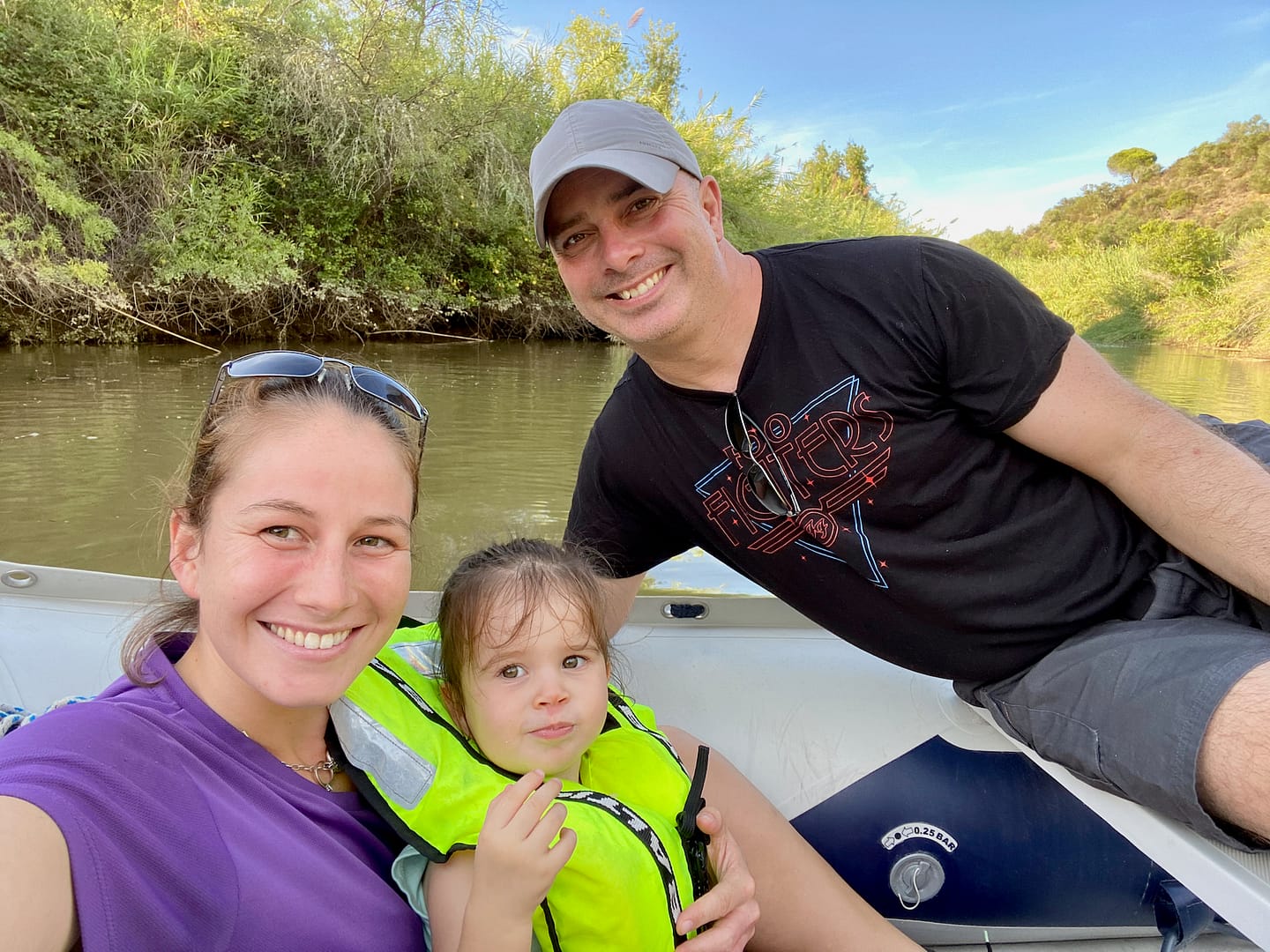
Baby growing up on a sailboat, everyday life afloat with a child
5. What are we willing to adapt — and what are we not?
For a long time, we kept going partly because we felt we should.
Because other people were crossing oceans. Because “proper” sailors didn’t stop. Because part of us worried that stepping back meant we’d failed.
But adapting is not the same as giving up.
We stayed living onboard for another year or so after my confidence was shaken, but eventually I realised I was ready — emotionally and physically — to step back onto land for a bit. Naming that out loud was hard. Honouring it was harder. But it was also one of the most responsible decisions we made as parents.
Dave found moving back to land incredibly challenging, but as it was the right thing to do for Erin and I at the time, he supported my choices.
You know the saying — when it stops being fun for one of us, it stops being fun for all of us?
Flexibility isn’t weakness. It’s care.
6. What would this cost us — financially, emotionally, practically?
This isn’t about spreadsheets or precise budgets.
It’s about recognising that every lifestyle choice has a cost, even the ones we love.
Living afloat can cost certainty, ease, spare energy, and emotional bandwidth — especially when you’re the one carrying most of the planning and decision-making.
Being honest about that doesn’t make you negative. It makes you prepared.
It will also cost — probably — whatever you have money-wise. If you have a small budget, it’ll cost that. If you have a bigger budget, it’ll cost that too!
Bigger boats = bigger bills in so many ways. Equipment onboard, rigging, berthing fees, antifouling costs, labour when doing work, bigger sails… the list goes on.
Another way of thinking is to consider how you would feel if you didn’t follow this path or give it a go. Would you regret not doing it?
This is one we talk about a LOT, especially now we’re back on land. Will we regret not going back to the sailing lifestyle?
7. If we didn’t do this, what would we want instead?
This is a question we still come back to — a lot.
We sailed around 5,000 nautical miles. We crossed the Bay of Biscay with an eight-month-old and our miniature Jack Russell. But we didn’t cross an ocean. We didn’t make it to the Caribbean. And yes, if I’m honest, there’s still a part of me that wonders whether we “did it properly”.
There’s a part of me that really wants to cross the Atlantic — not necessarily because I’m desperate to get to the other side (although the Caribbean does sound pretty idyllic), but because I want to be able to say I’ve done it. To quiet that little voice that says we stopped short.
But the more distance I get, the more I realise this: life afloat gave us exactly what we needed at the time. And stepping away from it gave us what we needed next.
Both of those things can be true.
There’s one version of life I can picture so clearly. A plot of land. A little cottage in the countryside. Outbuildings where each of us has space for our own projects. Being surrounded by animals. Growing things. Making things from scratch. Living slowly and deliberately, away from the constant rush.
And then there’s another version of life that still pulls at me just as strongly — travelling our world slowly by sailboat, really getting under the skin of each place we visit instead of just ticking it off a list. Staying long enough to feel like we belong, even briefly.
I honestly don’t know which of those lives would suit me better.
Maybe I need six months of one and six months of the other. Maybe I’ll do one for a few years until I feel the need for a break, then switch. Maybe one will feel right for a season — and then it won’t anymore.
You might want two completely opposing ways of life. And that’s OK.
There doesn’t have to be one single, perfect answer.
You’re allowed to change your mind. You’re allowed to grow out of one life and into another without it meaning the first one was a mistake. You’re allowed to build a life in chapters, rather than committing to one story forever.
If you’re struggling to answer this question yourself, sometimes it helps to look at what already draws you in. Your Pinterest boards. The reels that stop you scrolling. The YouTube videos that stay with you long after you’ve watched them.
Our social media feeds often know before we do.
We haven’t closed the door — we’re just not rushing through it
One thing I want to be really clear about is this: we’ve never ruled out going back to sea as a family. All of us miss it, the lifestyle, the adventures, the time we had together as a family.
We talk about it almost every day.
We constantly revisit the same questions — sometimes quietly, sometimes out loud — about when (or if) the time might feel right again. We think about what kind of life we want to give Erin, and what that actually looks like in practice.
On land, that often means both of us working to cover the ever-growing list of monthly bills. It means school days that keep her away from us for most of the day. It’s familiar, stable, and socially rich — but also fast, expensive, and tiring in ways we didn’t fully appreciate before.
At the same time, we can see what school gives her. The friendships. The confidence. The independence. The structure. Watching her grow in that environment matters to us too.
Holding both of those truths at once is hard.
We’ve bought another boat. She’s there in our local boatyard, waiting. We’re here. But neither the boat nor us are quite ready to throw off the bow lines and sail off into the sunset — and that’s okay.
This stage of life feels like a pause, not an ending. A period of listening, watching, and asking better questions rather than forcing an answer.
It’s a question of ‘watch this space’ to see what we end up doing next (because honestly, we don’t even know ourselves yet!).
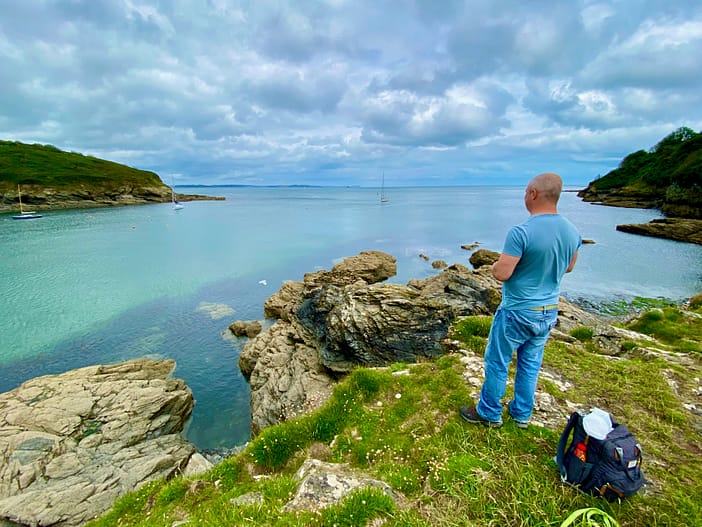
Reflecting on life choices beside the sea
Some gentle permissions we wish we’d had earlier
You’re allowed to:
- Take your time
- Change your plans
- Slow down
- Ask for support
- Stop if it isn’t working
- Decide it’s not right — or not right yet
Thoughtful decisions protect families. Pausing isn’t a lack of courage; it’s often an act of care.
A calm closing
Life afloat gave us an extraordinary time together as a family — a time I still miss deeply now that our lives look different again.
Families Afloat exists not to persuade families to sail away, but to help them think clearly, honestly, and ethically about big choices — especially when children are involved.
You don’t need all the answers today.
This lifestyle isn’t going anywhere.
And whatever you decide, you deserve to make that decision feeling informed, supported, and at peace with it.
We’re here for you along every step of the way, and we want to help you make the right choices, whenever you’re ready for them.
If you’re quietly sitting with these questions too, you’re exactly who Families Afloat is for.
Some other posts you might enjoy
Finding out more About Us
Living on a Boat: The Ultimate Guide
0 comments