Welcome to Families Afloat!
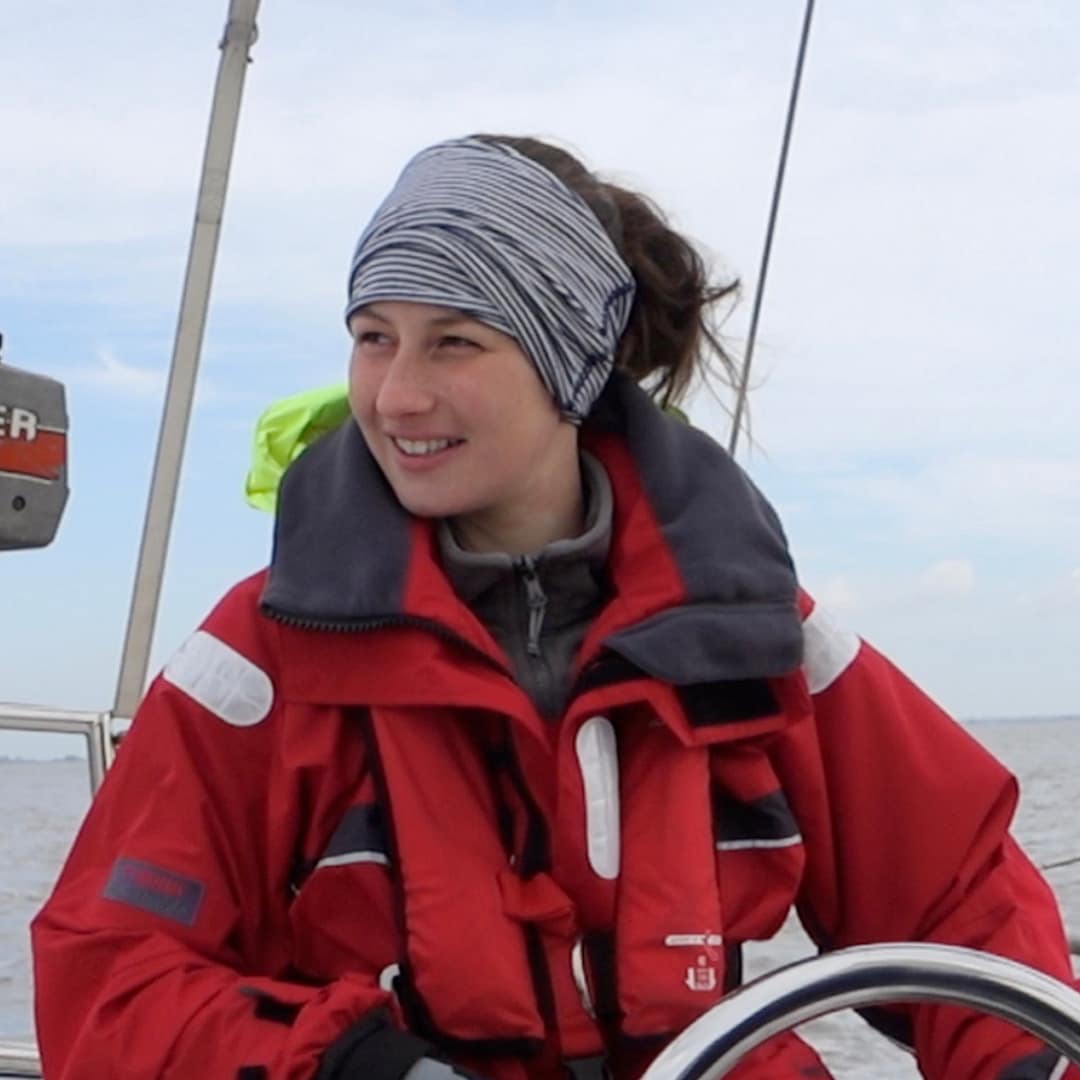
I’m Robyn Hawkins, a self-taught sailor, mumma, and the creator of Families Afloat. I’m really glad you’ve found your way here.
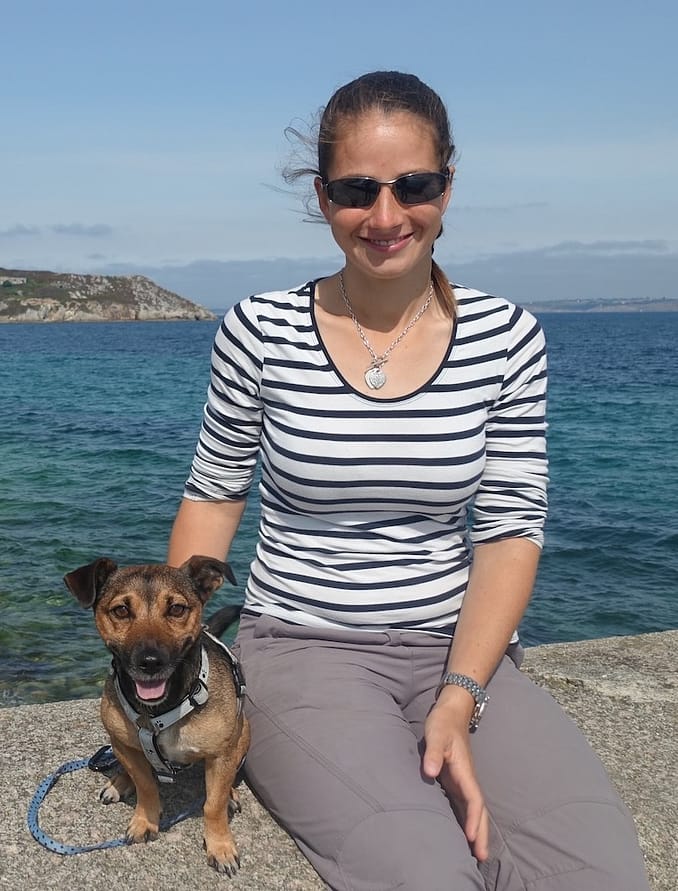
Robyn Hawkins and her miniature Jack Russell, 'Scrappy' in Camaret-sur-Mer, France (2017)
From our experience, life on the water can be incredibly powerful in quiet, unexpected ways.
Living and travelling by boat can be an extraordinary way to experience the world — one that slows life down, sharpens your awareness, and invites a different kind of connection with people and places. Time afloat has a way of changing you, often quietly, and often in ways you don’t fully understand until later.
But Families Afloat isn’t here to romanticise sailing or suggest it’s the right choice for everyone.
My intention with this space is to offer perspective, lived experience, and thoughtful guidance — alongside practical tips and honest reflections — so families can explore the idea of life afloat with clarity and care. Not to rush decisions, but to support them. Not to sell a lifestyle, but to help people decide what truly fits their family.
About Families Afloat
I started Families Afloat because, once our daughter entered the picture, I realised how little space there was online to think carefully and honestly about what life on the water really asks of a family.
Over time, it’s grown into something more than inspiration alone.
Our Story
In 2017, my partner and I bought our first sailboat — a 1974 Dufour 34 — despite having very little sailing experience (I had none at all). We rented our house out, stepped away from our NHS careers, and gave ourselves permission to pause during a difficult season of life.
What began as a two-year career break slowly became a much longer chapter.
For the first couple of years, it was just the two of us and our miniature Jack Russell, Scrappy. Later, we navigated pregnancy at sea, brought our daughter home to the boat less than a day after she was born, and continued sailing with a baby, who then became a toddler onboard.
Over five years, we lived aboard through winters in marinas and spent our summers sailing, exploring, and living at anchor. We sailed around 5,000 nautical miles, and crossed the Bay of Biscay with an eight-month-old. We also learned — sometimes the hard way — that life afloat can be both deeply rewarding and genuinely challenging.
Eventually, we made the decision to step back onto land for a while when life afloat no longer felt right for all of us. That choice was as important as any we made while sailing.
We haven’t closed the door on the sea — we have salt in our blood now.
We’re still asking the same questions about whether or not we should trade land life for boat life — just from a different place and perspective this time.
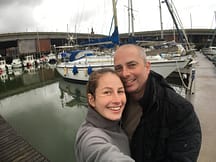
Our first boat, 'Baremka', a 1974 Dufour 34
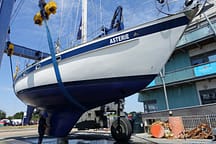
Our second boat, 'Asterie', a 1989 Hallberg-Rassy 42E
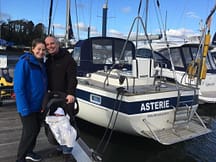
Bringing our daughter home from hospital less than a day old!
Why Families Afloat exists
There’s no shortage of content online telling people to sell everything and sail away.
What I struggled to find — especially once our daughter entered the picture — was space to think.
Space to ask honest questions about fear, finances, wellbeing, relationships, and what “enough” really looks like for a family. Space to acknowledge that answers change over time — and that pausing, adapting, or stepping away can be just as intentional as carrying on.
Families Afloat exists to hold that space.
It isn’t here to convince anyone to sail away, follow a particular route, or prove anything to anyone else. It’s here to help families slow down, reflect honestly, and make well-informed decisions about life afloat — especially when children are involved.
If you’re at the very beginning of this thought process, you might find this helpful:
Is Life Afloat Right for Your Family? The Questions We Had to Answer First
What you’ll find here
On Families Afloat, you’ll find a mix of:
- Honest reflections from our time living and sailing aboard
- Practical insight drawn from lived experience, not theory
- Guidance around sailing with babies, toddlers, and children
- Resources designed to support thoughtful, realistic planning
Some posts are practical. Others are reflective. Many sit somewhere in between.
What they all share is the same intention: to offer perspective rather than pressure.
Who is Families Afloat for?
Whether you’re a parent or grandparent, an aunt or uncle, completely new to sailing or a salty seadog — if you’re thinking about getting out on the water with your family, you’re in the right place. That might be with a baby, a toddler, school-aged children, teenagers, or somewhere in between. You don’t need to have it all figured out to belong here.
You might be:
- Dreaming from land
- Already living aboard
- Navigating a transition
- Or questioning whether to continue, pause, or change direction
Families Afloat is here to support you as you explore what feels right for your family.
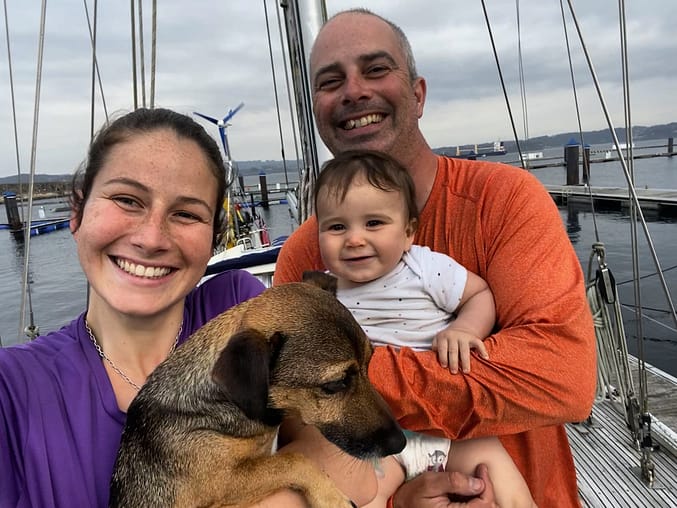
Robyn Hawkins and her family after successfully crossing the Bay of Biscay in 2.5 days with an 8-month-old!
A Little More About Robyn
Alongside being a sailor, mum, author, and the creator of Families Afloat, I’m also very much a real, imperfect human doing slightly unusual things — originally from Shropshire in the UK, but now based on the Isle of Wight.
I’m a food lover and travel enthusiast, and I’m almost always thinking about what I want to eat next or where I’d like to explore. I love to sing (preferably when no one else can hear), still enjoy goofing around like my ten-year-old self, and will choose comfort over style every single time.
I have an amazing fiancé who puts up with all my quirks, an incredible little girl who makes me laugh every day, and a miniature Jack Russell called Scrappy who has been with us through every chapter of our sailing life so far.
I love slow, comforting pleasures — spa days, reading, cooking and baking, family time, and switching off with a good film or series. (Downton Abbey, The Crown, Star Trek, Pitch Perfect and Grown Ups are all firm favourites.) I also have very strong opinions about food: I can’t stand eggs, cream, milk or butter unless they’re well hidden — but pancakes, cakes, creamy sauces and garlic bread are absolutely my kind of yum. What can I say? I’m weird.
One thing I never expected when we started sailing was the community.
I’ve never come across another group of people quite like the sailing world — people from completely different backgrounds, brought together quickly and intensely by shared experiences. The friendships formed over impromptu drinks and snacks onboard, the stories swapped after long passages, the bonds built through moments of challenge and joy — it’s something really special.
Life afloat has changed me in ways I couldn’t have predicted. It taught me new skills, reshaped how I think about time and work, and showed me what’s possible when life slows down enough for you to really notice it. Some of the most extraordinary moments I’ve ever experienced happened at sea — like watching bioluminescence light up a pitch-black night as dolphins raced alongside us, the water glowing around them like underwater fireworks. It was genuinely mind-blowing.
That sense of wonder, connection, and community is something I still carry with me — and it’s a big part of why Families Afloat exists. Not to persuade anyone to chase a particular lifestyle, but to help others explore what might be possible for them, thoughtfully and honestly, in their own way.
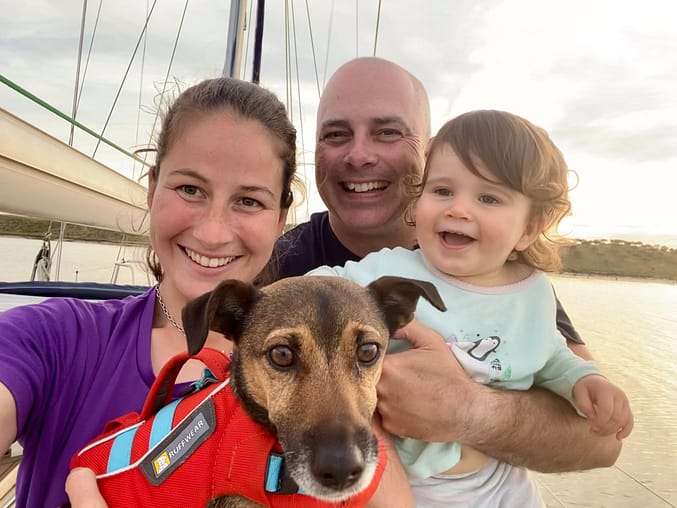
Robyn Hawkins and her family at anchor on their sailboat
Keeping in Touch
If you’d like to stay connected, there are a few easy ways to do that:
- Comment on our posts — I love hearing your thoughts and experiences.
- Follow along on social media — you can find Families Afloat on Instagram, Facebook, Pinterest, YouTube, and Twitter (X).
- Email us — you’re always welcome to get in touch directly at hello@familiesafloat.com.
- Join the mailing list — sign up to receive new blog posts, articles, and the Families Afloat newsletter straight to your inbox (free).
- Visit the Contact Us page — another way to reach out if that feels easier.
Families Afloat isn’t about rushing decisions.
It’s about asking better questions — and giving yourself permission to take the time to answer them.
If you’re looking for a place to begin, this post is a good starting point.